Hail country
How an Oklahoma hail claim actually works.
Documented first, honestly scoped, and never inflated. This page exists because so much of what happens in this state after a storm is the opposite.
01
We inspect and document
Every slope photographed, impact density measured per test square, soft metals and vents checked as corroborating evidence. Written to be readable by an adjuster.
02
You file the claim
With your own insurer, using our documentation. We are not your public adjuster and we do not file on your behalf.
03
We meet the adjuster on the roof
So the scope is agreed by two people looking at the same shingles, rather than negotiated over email.
04
Scope agreed, work scheduled
You approve it, we build it. Supplements only where something genuinely was not visible at first inspection.
What we will never do
- Pay, waive, rebate or absorb your deductible
- Add damage that was already there
- Tell you a claim will definitely be approved
- Ask you to sign an authorisation on the doorstep
Under Oklahoma law a roofing contractor may not pay, waive, rebate or otherwise absorb an insurance deductible. Any contractor offering to is proposing something illegal that puts your claim and your policy at risk alongside their own licence.
What we look for
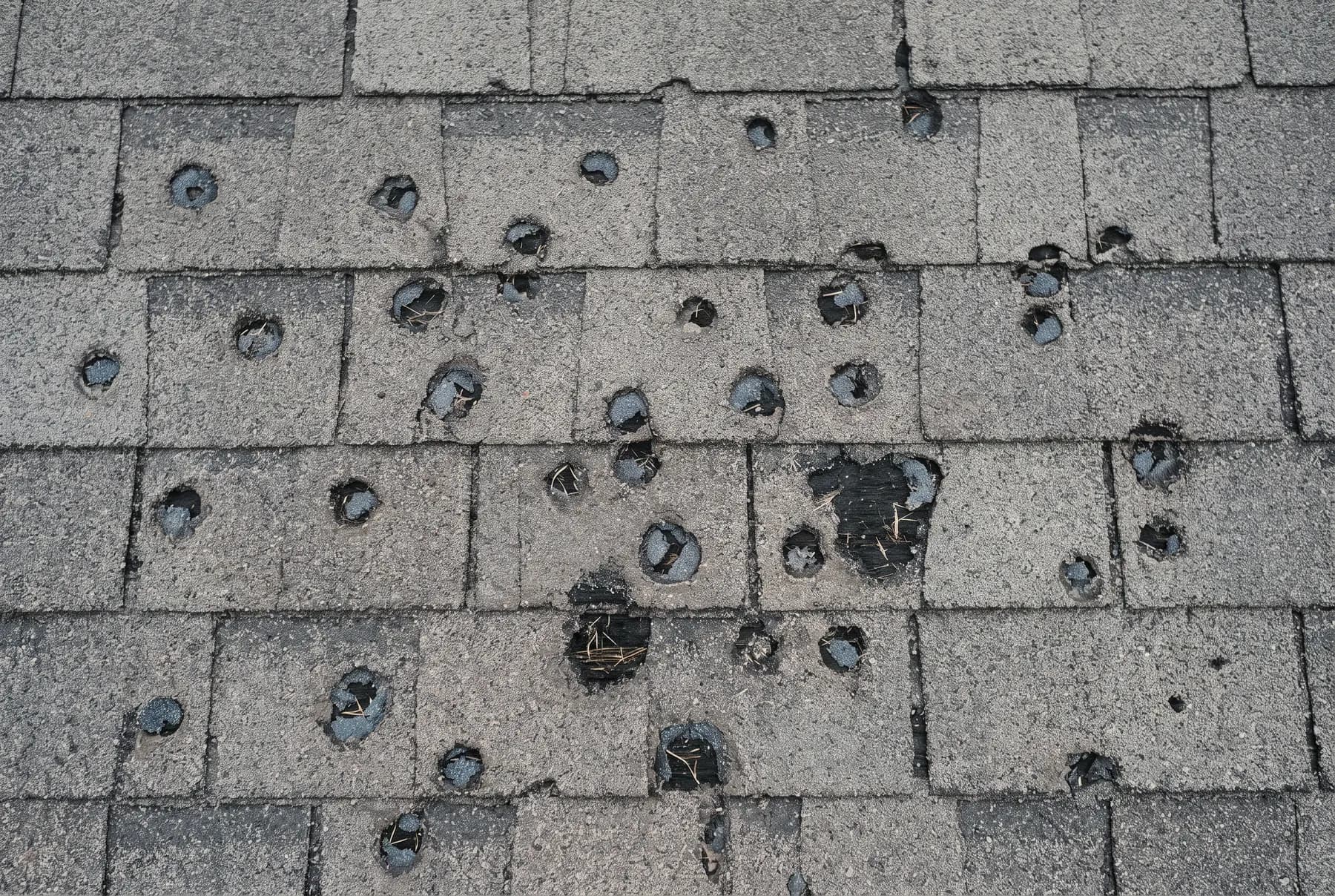
Impact density, not impressions
Adjusters work from a test square — a marked area of roof, with the number of genuine impacts inside it counted. That number is what decides a claim, not how bad the roof looks in a photograph.
We measure the same way they do, and we check soft metals, vents and gutter aprons as corroborating evidence because those dent when shingles are ambiguous.
Sometimes the count is not there. We will tell you that, and you will still have the report.
- Test squares marked and counted per slope
- Soft metals checked as corroborating evidence
- Report written for an adjuster to read